Surgical conversations · 8 July 2026
Accessing aesthetic care in Western Sydney
Penrith and the Nepean corridor are where people live, work and recover, not a footnote to a Sydney postcode. This essay looks at travel, follow-up geography, public and private pathways in general terms, and why local aftercare outweighs a famous address.
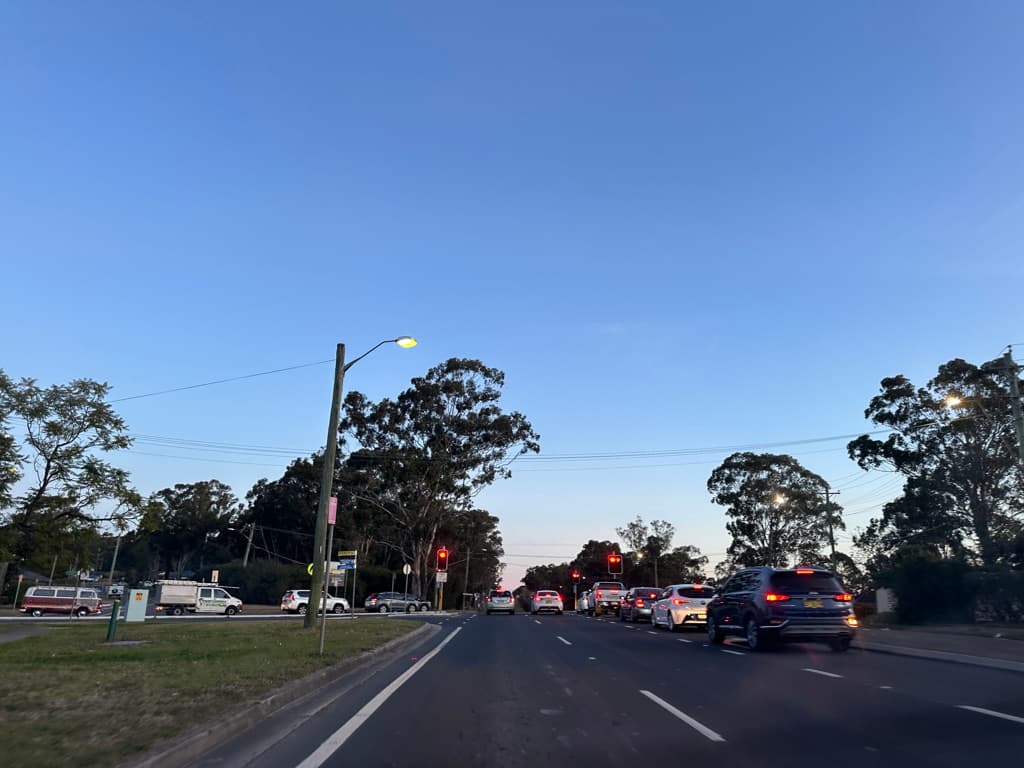
Chris.sherlock2. Richmond Road - border of Cambridge Park and Penrith in New South Wales 29.jpg. CC BY-SA 4.0. Wikimedia Commons. Source · CC BY-SA 4.0 All image credits

Western Sydney is not the outer edge of someone else’s city. It is a set of places where people already have general practitioners, schools, shift work, and a river. Penrith sits on the Nepean with the Blue Mountains as a western wall and a long road back toward the harbour. When aesthetic care is discussed as if it only happens in a handful of inner postcodes, the conversation has already forgotten who has to get home.
This is not a directory. It is not an argument that one suburb is more refined than another. It is about geography as a clinical fact: consultations, procedures, and aftercare all occupy time on a map.
Penrith and the Nepean corridor as a place people live
The corridor from the foot of the mountains through Penrith, along the river towns and into the broader west, is ordinary in the best sense. People age here. They work nights here. They care for parents here. They do not become theoretical because a brochure was designed in another postcode.
Elective aesthetic conversations happen in this landscape for the same reasons they happen anywhere: a body that has changed, a function that has changed, a wish that may or may not survive a proper consult. What differs is the scaffolding around the decision. How far is the rooms from the car park. Who collects the children. Whether a partner can take a second day off. Whether the person on the after-hours number understands that “nearby” does not mean a ten-minute taxi.
Treat the suburb of a clinic as information about travel, not as a proxy for skill. A Penrith address does not tell you about training. A harbour address does not either. Ahpra registration tells you about entitlement to practise. The rooms tell you about parking. Keep those facts in separate pockets.
If you are reading this because an older local name still sits in the memory of Woodriff Street or a city outpost, hold the memory as history. A journal can keep a place-name without converting it into a booking engine. The useful question is not whether a suburb used to have a particular shopfront. It is whether the practitioner in front of you is registered, and whether the follow-up is reachable from your kitchen.
Travel to Sydney CBD, counted honestly
Plenty of people in the west will still travel in for a consultation. That can be reasonable: a particular specialist, a hospital credential, a second opinion. What is less reasonable is to count only the first trip.
Write the journeys down. Consultation. Possible second consultation. Pre-operative tests. The procedure day, with a driver. The first review. The second review. An unplanned visit if a wound weeps or a temperature rises. Each of those has a peak hour, a fuel cost, a parking cost, and a version in wet weather. If you take the train, there is still the station car park and the walk you may not want to make after surgery.
Ask the rooms how they handle people who are not local. Some will have a clear plan: a first meeting in the city, reviews closer to home, a named local practitioner who will see you if something is wrong. Some will have no plan except that you are expected to be dedicated. Dedication is not a discharge summary.
Time also belongs in the consent. If you must be near the theatre for a certain period, that should be said while you still have a choice. Staying in the city overnight is a logistical decision with a price. So is driving back over the river the same day. Neither is a personality test.
For consultation preparation, pack the geography in with the medicines list. It is part of your history. A practitioner who waves it away is waving away the week you will actually have.
Asking about follow-up geography
Follow-up is where famous postcodes quietly fail people. The procedure is photogenic. The Tuesday afterwards is not. You want to know, in names and addresses:
- Where the first review happens.
- Who conducts it, and whether that person operated.
- What number you ring after hours, and who answers it.
- Where you would be directed in an emergency, and whether that hospital has your records.
- Whether a local general practitioner will be written to, with your consent, so that someone near you knows what was done.
If the answers all point back to a single inner-city suite, imagine the suite at 9 p.m. with the M4 slowed. Then ask whether a credentialed colleague in the west can share care. Shared care is ordinary in other parts of medicine. It should not become mysterious because the procedure is elective.
Telehealth can help with some questions. It cannot drain a haematoma through a screen. It cannot replace a person who can look at a wound in a room. Use it as a supplement, not as the entire aftercare plan.
Write the plan down as part of informed consent. If it exists only as a reassuring sentence, it does not yet exist.
Public and private pathways, in general terms
People in Western Sydney, as elsewhere, sometimes hope that a public hospital will do appearance work that matters to them. Sometimes that hope is about money. Sometimes it is about trust in a public system they already use.
In general terms, public hospitals in New South Wales organise surgery around clinical need, capacity, and the distinction between treating disease or restoring function and performing elective appearance procedures. Reconstructive work after cancer, trauma, or congenital difference may sit on public pathways, subject to assessment and waiting. Elective cosmetic procedures are typically offered privately, with private fees and private responsibility for follow-up.
That paragraph is a sketch, not a ruling about your referral. NSW Health pages and a conversation with a general practitioner are the proper next steps. A social media account that says “Medicareable” as a lure is not. Item numbers, if they apply at all, depend on clinical criteria. They are not a coupon.
Private pathways are not a single product. They include consultations in rooms, day procedure hospitals, overnight facilities, and different anaesthesia arrangements. Ask where the procedure would actually occur, who credentials the practitioner there, and what happens if you need to stay unexpectedly. Ask what is excluded from a quote. Ask how pathology, imaging, and garments are arranged if you would rather have those closer to home.
A second opinion can cross the public–private line. A public clinic may tell you that a problem is not a public operation. A private practitioner may tell you that it is not a good private one either. Both answers are information. Neither requires you to proceed.
Why local aftercare matters more than a famous postcode
Prestige in this industry is often a postcode performance. The lighting is better in the photographs. The street name is famous. Recovery, however, happens in the house you already have. It happens with your bathroom, your stairs, your shift pattern, your mother who can visit, your inability to lift a toddler.
Local aftercare is not parochial. It is the difference between a problem being small and a problem being a two-hour journey while you are unwell. It is whether the person on the phone has a path to see you today. It is whether your general practitioner received a letter. It is whether you can fill a medicine closer than the CBD.
If you choose to travel for the operation itself, you can still insist that aftercare is designed, not improvised. Named covering practitioners. Written instructions that assume you are in Penrith, not in a hotel foyer. A plan for wound care that a local nurse or GP practice could understand. A clear statement of who is responsible.
If you choose to stay local for the whole sequence, you still do the unglamorous checks. Registration. Profession. Specialist title if one is claimed. Conditions on the register. Consent that includes doing nothing. No testimonials as evidence. No same-day pressure dressed as convenience because you “already drove so far.” Distance can be used as a sales tool in either direction: come in, you are already here; stay, it is easier. Ease is not an indication.
Western Sydney deserves the same literacy the inner city does, without the implication that seriousness only exists east of a particular on-ramp. The river, the road, the work roster, and the spare room for a recovering adult are the real theatre of aftercare. Choose practitioners who can talk about those things without embarrassment. A famous postcode will not collect you from Nepean Hospital. A clear plan might mean you never need that collection. The plan is the thing to take home.
Questions readers usually ask
- Do I have to travel to Sydney CBD for cosmetic surgery consultations?
- No. Consultations can occur wherever a registered practitioner lawfully practises. Many people still travel for a particular surgeon or hospital, then underestimate the return trips. Ask, before you book theatre, where reviews and urgent problems would be handled if you live in the Nepean corridor.
- Is cosmetic surgery available in the public system in New South Wales?
- Public hospitals prioritise disease, injury, reconstruction and function, subject to clinical need and local resources. Elective appearance procedures are typically private. Your general practitioner and NSW Health information are the right starting points for a specific situation. A clinic website is not a waiting-list authority.
- Why does aftercare location matter so much after surgery?
- Early problems do not schedule themselves around the M4. Swelling, wound concerns and pain need a reachable person who knows the operation. If the only review on offer is back in the city, you are planning not only a procedure but a sequence of peak-hour journeys while you are recovering.
- How do I check a Western Sydney practitioner before a consultation?
- Use the Ahpra public register, not a suburb reputation. Confirm the person’s profession, registration type and any conditions. Ask who will operate, who will anaesthetise, and who covers the after-hours number. A local address is convenient. It is not a substitute for registration.